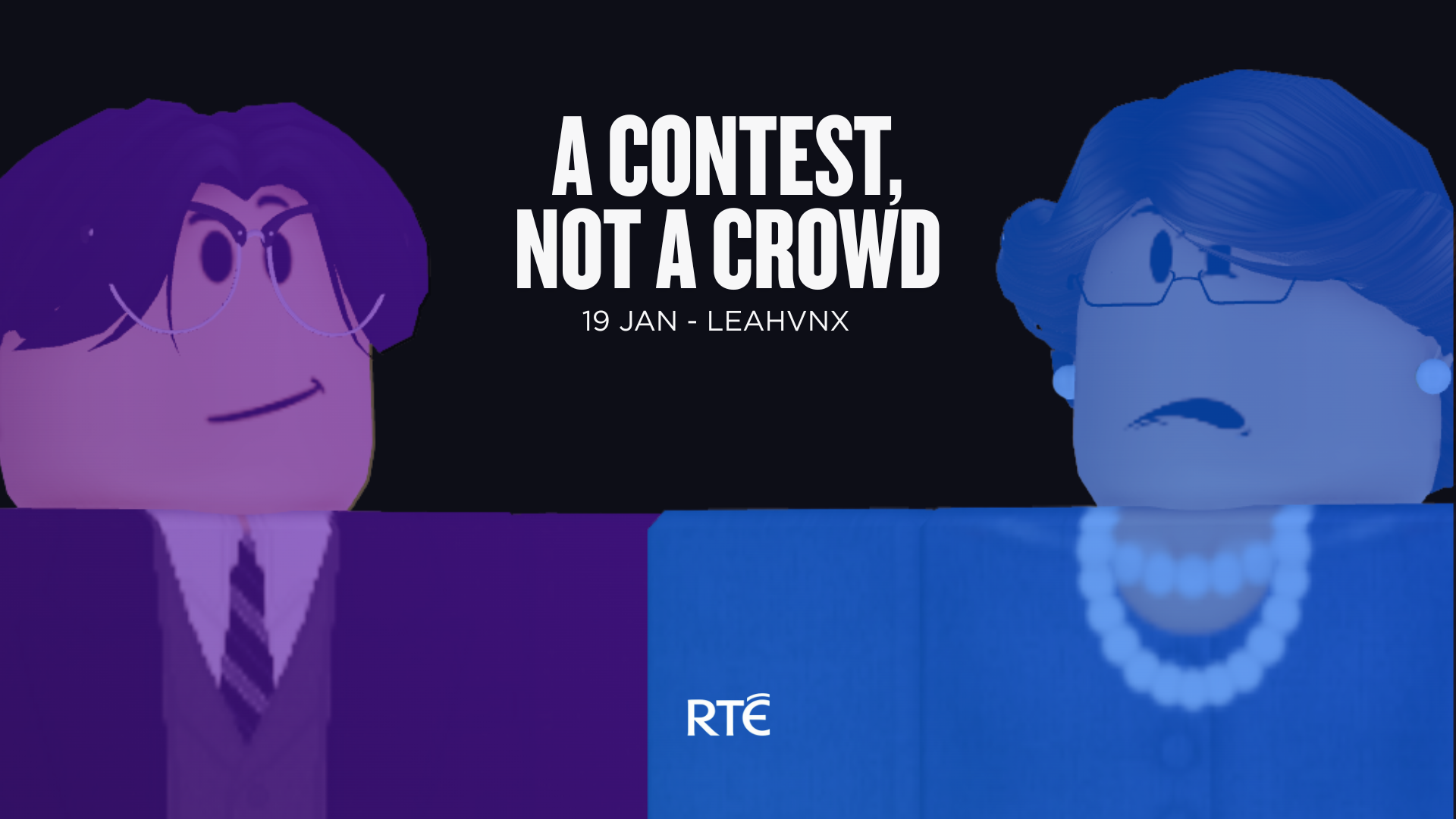
Since the very beginning of free elections in the Irish Republic, Ireland has been a multi-party democracy. Our first government, formed by JaneMReed, was supported by four parties spanning the political spectrum. Over the years, parties have risen, fallen, and occasionally dominated. What's rarer, however, is seeing two parties neck and neck, head to head, fighting for the keys to Merrion Street.
As we approach the upcoming General Election, a clear pattern is emerging in both polling and strategy. Fine Gael, the conservative alternative, and the Social Democrats, a centre-left opposition challenger, are effectively tied in the polls. These two parties have been targeting each other more aggressively than any other competitor. Only one of them is likely to take the lead in forming Ireland's next government.
Ognian0, leader of the Social Democrats, has emerged as the community favourite, voted Ireland's favourite political leader. He's widely respected across the political establishment and clearly committed to delivering a major victory this election. In contrast, Sapphirinee is a long-time political player who has sought government through many elections. Her previous term ended with her coalition collapsing before the halfway point. Despite that, she retains a very strong and loyal base of support that has been built up over years. The contest between these two figures adds a personal edge to what is already a tight race.
What's positive is that no party can govern alone after this election. Sinn Féin and the Social Democrats share a friendly rapport, but even together, unless either makes significant gains, they wouldn't have enough seats to form a government. Fine Gael has coalition options with Fianna Fáil, while Labour has pledged to remain in opposition, potentially offering only confidence-and-supply support. This makes the race as much about building partnerships as it is about winning votes.
While much of the race is focused on personalities, the parties are also staking out clear ideological ground. Fine Gael emphasizes conservative stability and a "community-first" approach, positioning themselves as a safe, reliable choice. The Social Democrats are running on a centre-left vision, highlighting leadership, reform, and a message of progress. Voters are watching to see which party can deliver both a compelling vision and effective leadership.
Voters are hyper-focused on activity, political activity and in-game activity in particular. Nearly 94% of voters identified it as the most important issue to them. In practical terms, this election comes down to who can play the activity card best, translating engagement into support across the electorate. Ultimately, the party that can demonstrate the most active, effective political presence will have the edge.
At this stage, it's clear that Fine Gael and the Social Democrats are overshadowing the rest of the field. Fianna Fáil is struggling to distinguish itself, while Labour and Sinn Féin face challenges articulating proposals that resonate with voters. What promises to be a dramatic election will ultimately be defined by the duel between Fine Gael and the Social Democrats.